
 Education & Skills
 Industry
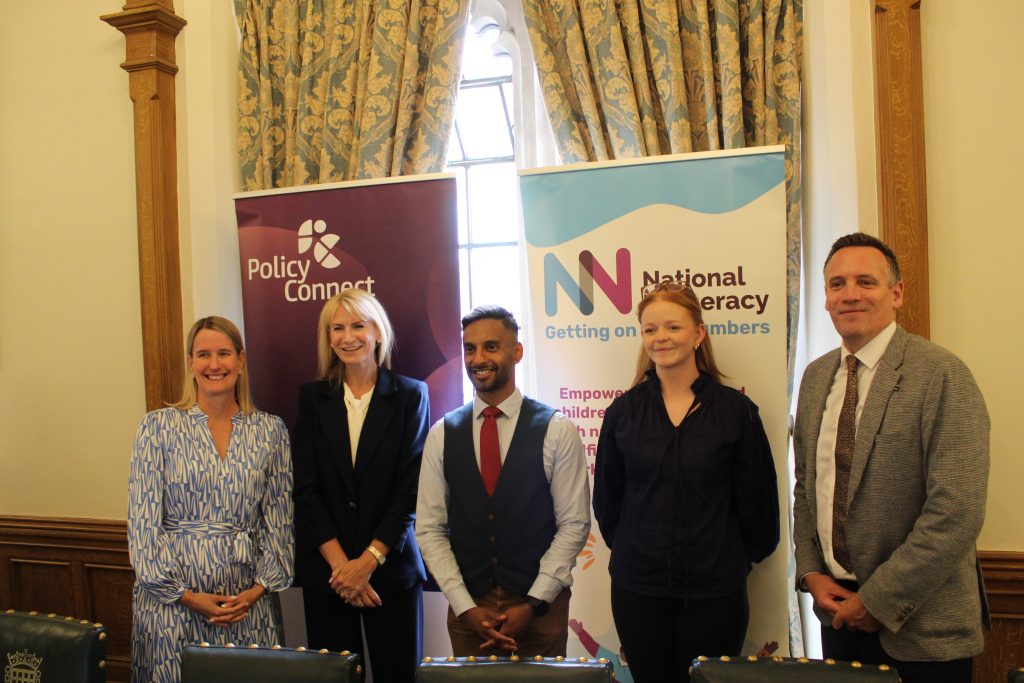
On 14 July, Policy Connect hosted a parliamentary report launch at the House of Commons, in collaboration with National Numeracy and KPMG UK, marking the publication of new research exploring what the rise of AI means for numeracy skills and social mobility in the UK.
The event brought together perspectives from education, industry, research and policy to examine both the opportunity AI presents and the risks of a widening numeracy skills gap, and to consider how education, employment and investment can better align to ensure no one is left behind as AI reshapes the economy.
The session opened with remarks from Lord Ravensdale, followed by an overview of the report’s findings from Rhiannon Tuckett-Jones, Research and Strategy Manager at Policy Connect and lead author of the report. This was followed by a panel discussion with:
- Sam Sims, CEO, National Numeracy
- Melissa Geiger, Chair, KPMG UK and Switzerland
- Erica Bourne, Group Chief People Officer, LSEG
- Bobby Seagull MBE, Ambassador, National Numeracy
An audience Q&A followed, before the event closed with optional networking.
The report finds that numeracy is fundamental to critical engagement with AI, yet is consistently overlooked in the current policy focus on digital and AI literacy. Only 25 per cent of UK adults believe good numeracy skills are needed to use AI tools, compared with 42 per cent who say the same of literacy skills, despite half the UK population having low numeracy. The research also highlights a confidence gap in AI adoption, particularly among older adults, and finds that where AI training exists, it tends to focus on operating tools rather than building the understanding needed to judge whether outputs can be trusted, with access to such training uneven across socioeconomic groups.
The report sets out five recommendations:
- Government recognition of numeracy as a foundational condition for AI literacy, backed by investment, including a funded successor to the Multiply adult numeracy programme with AI literacy built in from the outset.
- A publicly available critical AI literacy curriculum framework, developed by the Department for Education alongside Skills England, employers and AI sector representatives, with numeracy specialists involved from the start.
- Explicit inclusion of critical AI literacy and key numeracy skills, including proportional thinking, probability and judging plausibility, in school and post-16 curricula, including the new digital V-level.
- Procurement requirements for the Department for Education’s AI tutoring programme to ensure tools support active numerical engagement rather than replace it.
- A structured national CPD programme for teachers, delivered through existing infrastructure such as teaching school hubs, with dedicated funding for staff release and AI literacy named as a competency across initial teacher training.
For further information, please contact Rhiannon Tuckett-Jones (rhiannon.tuckett-jones@policyconnect.org.uk) or Lavanya Rangarajan (lavanya.rangarajan@policyconnect.org.uk)
This event was hosted by Policy Connect in collaboration with National Numeracy and KPMG UK.
 Related content
 Research