

 Education & Skills

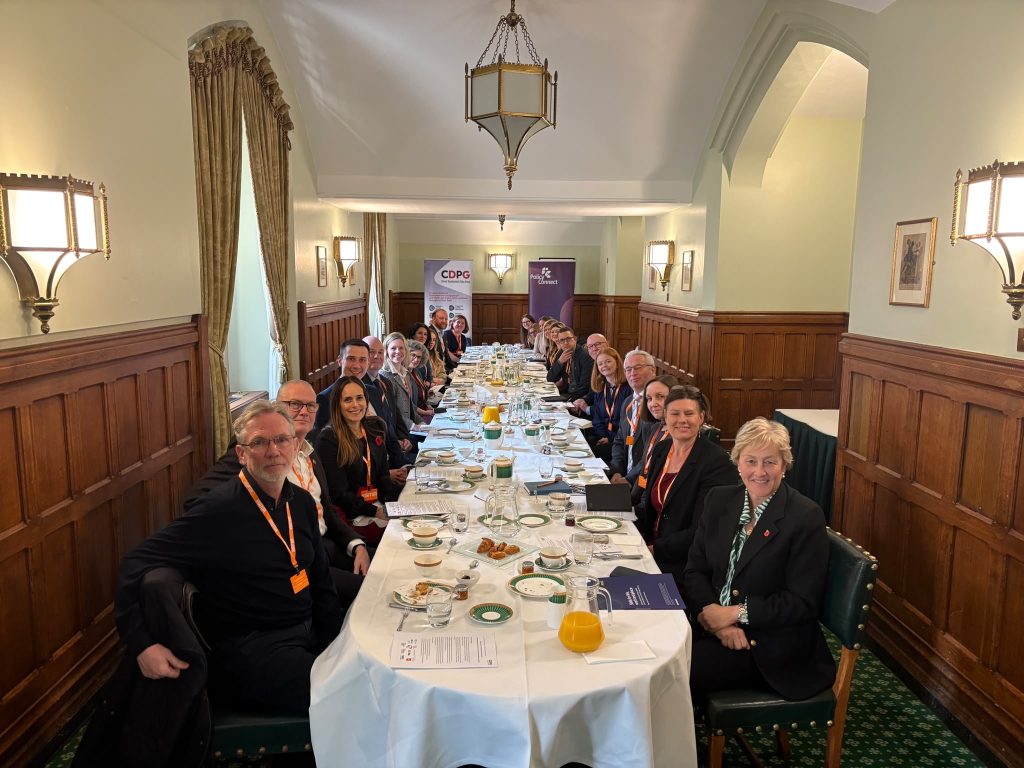
On 3 November, the All-Party Parliamentary Group for Skills, Careers and Employment (APGSCE) held a breakfast roundtable in partnership with the Career Development Policy Group (CDPG) to launch the Career Literate Nation.
The session was chaired by Lauren Edwards MP and Rhiannon Tuckett-Jones, Research and Strategy Manager at Policy Connect, with opening remarks and reflections from Baroness Ros Scott and Baroness Sater, House of Lords; Keren Coney, Senior Lecturer in Career Development at the International Centre for Guidance Studies (iCeGS), University of Derby; Joan Moore, Global Early Careers Director at Sage; Mark Bowman, Chief Executive of Inspira for Life; and David Morgan, CEO of the Career Development Institute.
The session brought together parliamentarians, policymakers, careers professionals, education providers and employers to examine the role careers guidance can play in supporting young people who are not in education, employment or training (NEET), or at risk of becoming so, and adults navigating a changing workplace. Building on the CDPG’s Career Guidance Guarantee, we explored what it would take for England to become a Career Literate Nation, in which everyone has the knowledge, confidence and support to navigate their career throughout their life. The discussion took place ahead of the final report of the Milburn Review and as National Careers Service staff move into the Department for Work and Pensions to form the new Jobs and Careers Service.
Participants broadly agreed that career literacy should be recognised as a foundational capability alongside financial, health and digital literacy, and that careers guidance should be treated as core infrastructure that enables education, skills and employment policies to achieve their intended impact, rather than as a standalone intervention. The value of improving everyday, informal careers conversations was highlighted, alongside the economic case for reducing skills mismatches and the framing of career literacy as an inclusion challenge.
On young people, early intervention was widely identified as the most effective approach to reducing the number who become NEET, with participants emphasising the intensive, sustained support needed by the most vulnerable and the range of barriers, including mental health, special educational needs and transport, that careers guidance alone cannot address. The discussion examined the loss of information at key transitions, the importance of local coordination, and the case for embedding careers learning within the curriculum, balanced against significant capacity pressures on teachers and careers leaders. Employers highlighted the growing emphasis on skills rather than qualifications and the impact of AI on recruitment, while some participants raised concerns that recent policy changes have increased the cost and risk of hiring young people, particularly for small businesses.
On adults, participants noted that most of the workforce over the coming decade is already in work, yet few adults access careers support, and those who would benefit most are often least likely to seek it. The creation of the Jobs and Careers Service was identified as an opportunity to integrate careers guidance into employment support, and participants cautioned against viewing AI and virtual tools as a substitute for expert human guidance. Questions were also raised about whether the Lifelong Learning Entitlement will be accompanied by the careers support, incentives and accountability needed to make it work for adults.
Throughout the discussion, participants emphasised the importance of centring the voices of young people and adapting systems to the needs of those navigating them. Looking ahead, participants suggested that meaningful progress could be made by embedding careers support across policy areas and building it into existing programmes, including through pilots within Connect to Work and the Jobs and Careers Service, supported by clearer incentives, accountability, robust data and stronger coordination across government and local partners.
For further information, please contact Rhiannon Tuckett-Jones (rhiannon.tuckett-jones@policyconnect.org.uk) or Max Bishop (max.bishop@policyconnect.org.uk).
Thank you to all those that attended, to the Career Development Policy Group for their partnership, and to our APGSCE members for supporting the session.


