

 Accessibility

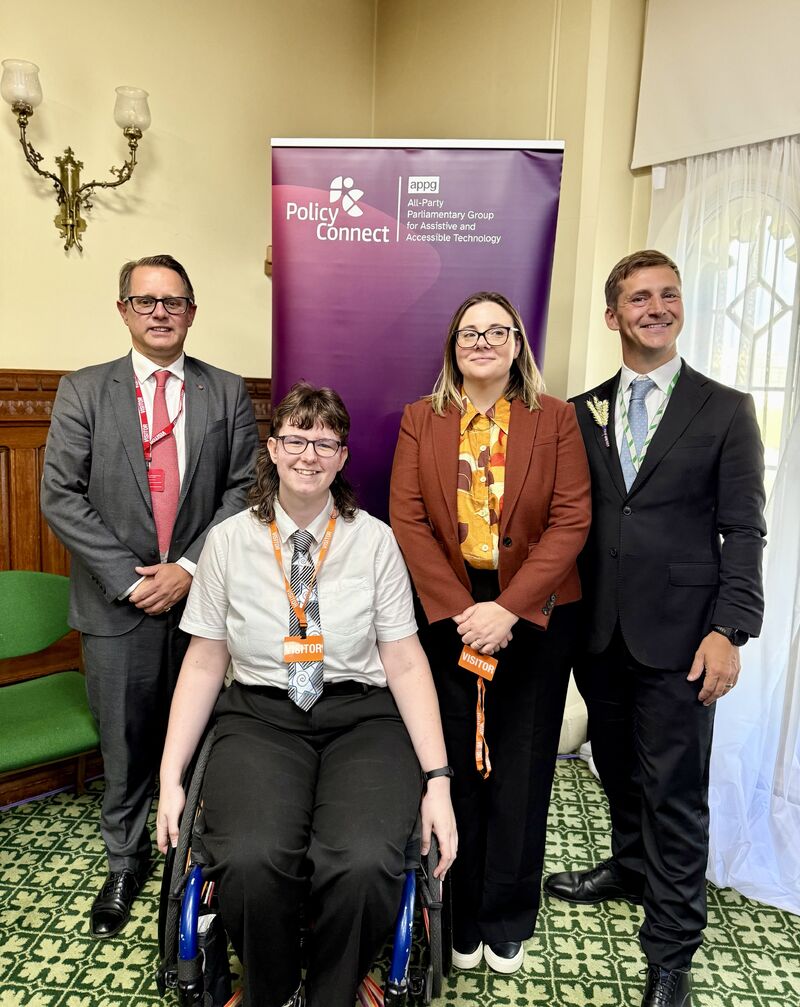
A discussion on proposed reforms to DSA and how changes to assistive technology funding could affect disabled students, universities and progression into employment.
Policy Context
The DSA provides non-repayable support for disabled students to meet additional costs arising from their disability while studying in higher education. In 2023/24, more than 88,000 students received DSA, which currently funds specialist equipment and software, disability-related travel, and non-medical support alongside universities’ existing responsibilities to make reasonable adjustments. This funding supports disabled students’ full and equal participation in higher education by helping to reduce disability-related barriers that may otherwise affect participation, course completion, and attainment.
On 26 March 2026, the Department for Education (DfE) launched a consultation proposing changes to the way assistive software is funded through DSA. The consultation argues that, as free and built-in accessibility features have become more widely available through mainstream devices and software, and as some universities increasingly provide learning and accessibility technologies directly to students, the existing approach should be updated to reflect these developments.
Under the proposed model, the starting assumption would be that assistive software is already available to the student and can meet their needs free of charge, either through in-built features in mainstream technology, free software or provision from their university. DSA-funded paid software would therefore only be provided where a student has an additional disability-related need that cannot be met in this way. For a number of software categories, including composition and mind-mapping, note-taking and captioning, research and referencing, revision, time and task management, and typing software, DSA funding would be limited to ‘exceptional circumstances’. Access to some paid speech-to-text and text-to-speech software would also be narrowed, while specialist software for vision impairment and optical character recognition would broadly continue to be funded. The consultation also proposes that, where paid-for software is approved, needs assessors would recommend a type of software rather than a specific brand, with DSA normally funding the lowest-cost product available that meets the student’s needs.
The consultation closed on 18 June 2026 and is no longer open for responses. The DfE has committed to publishing the consultation results and its formal response in autumn 2026; at the time of writing, this has not yet been published. The proposals are therefore still under consideration.
The proposed DSA reform sits within a wider policy landscape in which government is placing greater emphasis on assistive technology across education and employment. The DfE’s Special Educational Needs and Disabilities (SEND) reforms, introduced earlier this year, include a £1.6 million pilot of Assistive Technology Lending Libraries. The pilot enabled up to 3,800 mainstream settings to borrow and trial assistive technology, alongside national training to help educators use it effectively. At the same time, the DfE’s 2026 schools White Paper, Every Child Achieving and Thriving, states that for children with SEND, “well-chosen assistive technologies can reduce barriers and enable more individual needs to be met through learning”.
As in education, the Government is also exploring how to strengthen access to assistive technology to help people gain and maintain employment. The Department for Work and Pensions’ (DWP) 2025 Pathways to Work Green Paper, identifies greater use of assistive technology as having the potential to “transform the employment prospects of disabled people”, and announced that the Cabinet Office is considering the establishment of a Centre for Assistive and Accessible Technology; a recent update on the exploration of a Centre further announced the establishment of a “community of experts” on assistive technology and plans for a call for evidence later in 2026. In addition, the DWP has created a £60 million Pathways to Work Innovation Fund, to fund the use of technology and other innovative approaches to improving employment outcomes for disabled people.
As such, the present proposals are made in the context of wider government efforts to expand access to assistive technology. If the DSA changes have the impact of restricting some disabled students’ access to the tools they need, such proposals would appear out of step with progress on assistive technology elsewhere.
Summary
The APPGAT roundtable was held on 9 September 2026 to discuss the proposed changes to DSA funding for assistive technology. Chaired by Josh Fenton-Glynn MP, it brought together disabled students, universities, practitioners, disability organisations, technology providers, and sector bodies to consider the potential impact on disabled students in higher education.
A first group of concerns centered on the design of the reforms. Participants warned that the assumption that free or built-in tools would meet almost all disabled students’ differing needs and circumstances was misguided. They also argued that the ill-defined ‘exceptional circumstances’ route could create further delays, burdensome evidential requirements, and increased anxiety for students. Participants linked these weaknesses to the lack of meaningful co-production and testing in the reforms consultation, arguing that disabled students, practitioners and assistive technology experts should have been involved in shaping the proposals.
The second group of concerns focused on where the consequences of reform would ultimately fall. Contributors warned that reducing government-funded support would not remove disabled students’ underlying needs but could instead shift costs and responsibility onto universities and students. This means that the quality of support available may vary between institutions and individuals depending on their ability to make up for any shortcomings. They also questioned whether the reforms would represent better use of public funds once wider administrative, educational, and longer-term economic effects of employment are considered. In particular, participants argued that weakening DSA may undermine broader Government ambitions to improve access to assistive technology elsewhere across education and employment support.
Overall, the roundtable’s contributors questioned whether DSA reform could improve existing support without weakening personalised provision or shifting costs elsewhere, while emphasising the need to maintain continuity of support across education and employment, and to involve those most affected in the reform’s design.
These issues are explored through six key themes in the full outcome summary. Please find this under ‘related documents’ on this page.
For more information on this event and other Accessibility policy work, please contact Abigail Chapman-Miller at (Abigail.Chapman-Miller@policyconnect.org.uk)

Cross-party forum

 Related content
 Related documents


