
 Accessibility
Education and skills system reform critical to accelerating adoption of digital skills and technology in adult social care.
With technology at the centre of government plans for adult social care, it is vital that staff are equipped with the necessary ATech and digital skills to ensure disabled and older people can fully benefit from technology.
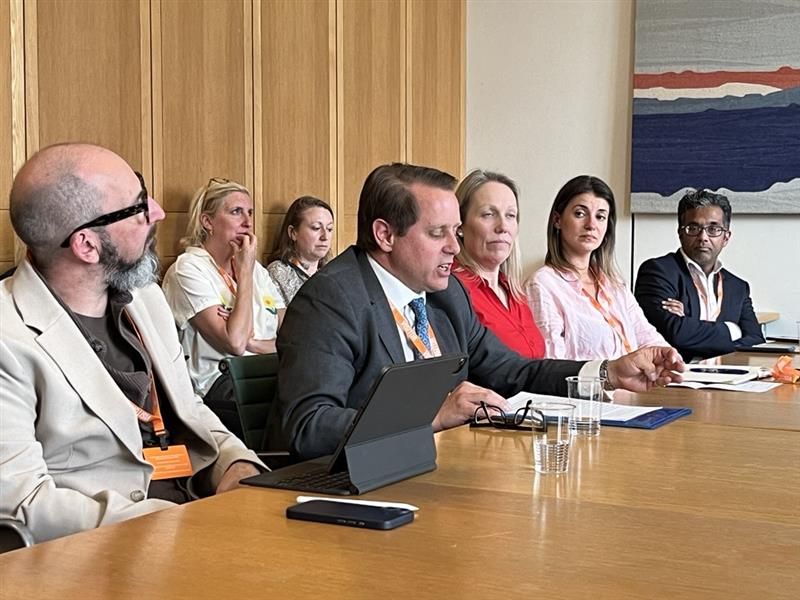
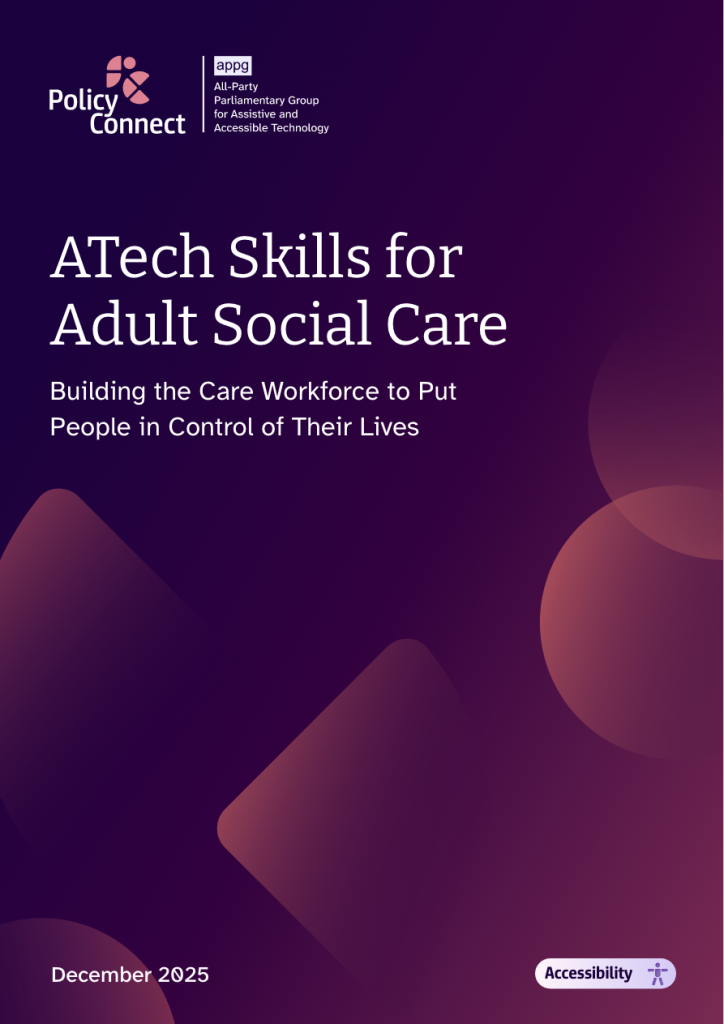
Cross-party think tank Policy Connect’s latest report, ‘ATech Skills for Adult Social Care: Building the Care Workforce to Put People in Control of Their Lives’, is co-chaired by Councillor Teresa Murray, the Deputy Leader & Cabinet Member for Adult Services and Health at Medway Council, and Councillor Diane Morton, the Cabinet Member for Adult Social Care and Public Health at Kent County Council.
ATech Skills for Adult Social Care sets out practical steps for government, educational bodies, and industry to accelerate adoption of digital practices in adult social care through reform of the education and skills system.
The Department of Health and Social Care’s 10-Year Health Plan envisages a move from hospital-based care to more interventions being delivered in the community, with Health Secretary Wes Streeting pledging to harness “the full potential of cutting-edge technology to transform social care, helping people to live independently in their own homes and improving the quality of care”.
Despite this ambition, the adult social care workforce has often been slow to adopt digital practices – hampered by a lack of investment in skills and professional development and inadequate routes for career advancement and specialisation.
As part of its plans to create a National Care Service in England, the government has introduced a number of initiatives that seek to tackle these structural challenges and accelerate the adoption of technology in social care. Yet to succeed, these initiatives must be matched by changes to the education and skills system.
The Kent and Medway Digital Skills and Innovation in Health and Care (DSIHC) project forms the central case study of this report, as an example of how policymakers, the education and skills system, and the technology industry can create the learning opportunities that the 21st century adult social care workforce needs.
The All-Party Parliamentary Group for Assistive and Accessible Technology’s report makes seven recommendations on how the education and skills system for the adult social care sector can be reformed to reflect the increasing importance of digital skills and assistive technology, particularly for both care organisations and the people they support.
Clive Gilbert, report author, says:
“Almost four years ago, the APPG for Assistive and Accessible Technology published the Smarter Homes for Independent Living report to show how the smart home revolution can help people who draw on care enjoy healthier, more independent and fulfilling lives. But as that report made clear, this transformative potential won’t be realised without a technologically proficient adult social care workforce. ATech Skills for Adult Social Care shows how the government can work with the adult social care and education and skills system to build the skilled workforce that we need to make sure people who draw on care can harness the benefits of technology so they can take control of their care, their homes and their lives.”
Notes to Editors
For more information, please contact james.taylor@policyconnect.org.uk.
The report is sponsored by Kent Further Education – East Kent Colleges Group, MidKent College, and North Kent College – Medway Council, and Kent County Council.
About Policy Connect
Policy Connect is a cross-party think tank. We specialise in supporting parliamentary groups, forums and commissions, delivering impactful policy research and event programmes and bringing together parliamentarians and government in collaboration with academia, business and civil society to help shape public policy in Westminster and Whitehall, so as to improve people’s lives.
Our work focusses on five key policy areas which are: Education & Skills; Industry, Technology & Innovation; Sustainability; Health; and Accessibility.
We are a social enterprise and are funded by a combination of regular annual membership subscriptions and time-limited sponsorships. We are proud to be a Disability Confident and London Living Wage employer, and a member of Social Enterprise UK.
About the All-Party Parliamentary Group for Assistive and Accessible Technology (APPGAT)
The APPGAT aims to disseminate knowledge, generate debate, and facilitate engagement on assistive technology among members of both Houses of Parliament. The group is chaired by Josh Fenton-Glynn MP (Labour), with parliamentary Officers Lord Shinkwin (Conservative), Sadik Al-Hassan MP (Labour), and Lord Low (Crossbench), and Members including Steve Darling MP (Lib Dem), Rt. Hon Lord Blunkett (Labour), and Baroness Tanni Grey-Thompson.
This is not an official publication of the House of Commons or the House of Lords. It has not been approved by either House or its committees. All-Party Parliamentary Groups are informal groups of Members of both Houses with a common interest in particular issues. The views expressed in this report are those of the group.


 Download report