
 Education & Skills

In October 2025, the Government published its Post-16 Education and Skills White Paper, setting out ambitious reforms to further and higher education. The paper proposed a simplified qualifications landscape, a new role for Skills England in coordinating national skills planning, stronger employer partnerships, and significant new investment in 16-19 education.
When the White Paper was published, we brought together sector leaders, employers, and policymakers for a first reactions event, where attendees broadly welcomed the ambition but raised concerns about FE capacity, the risk of a “qualifications black hole,” and the lack of a clear skills roadmap for employers. You can read that write-up here.
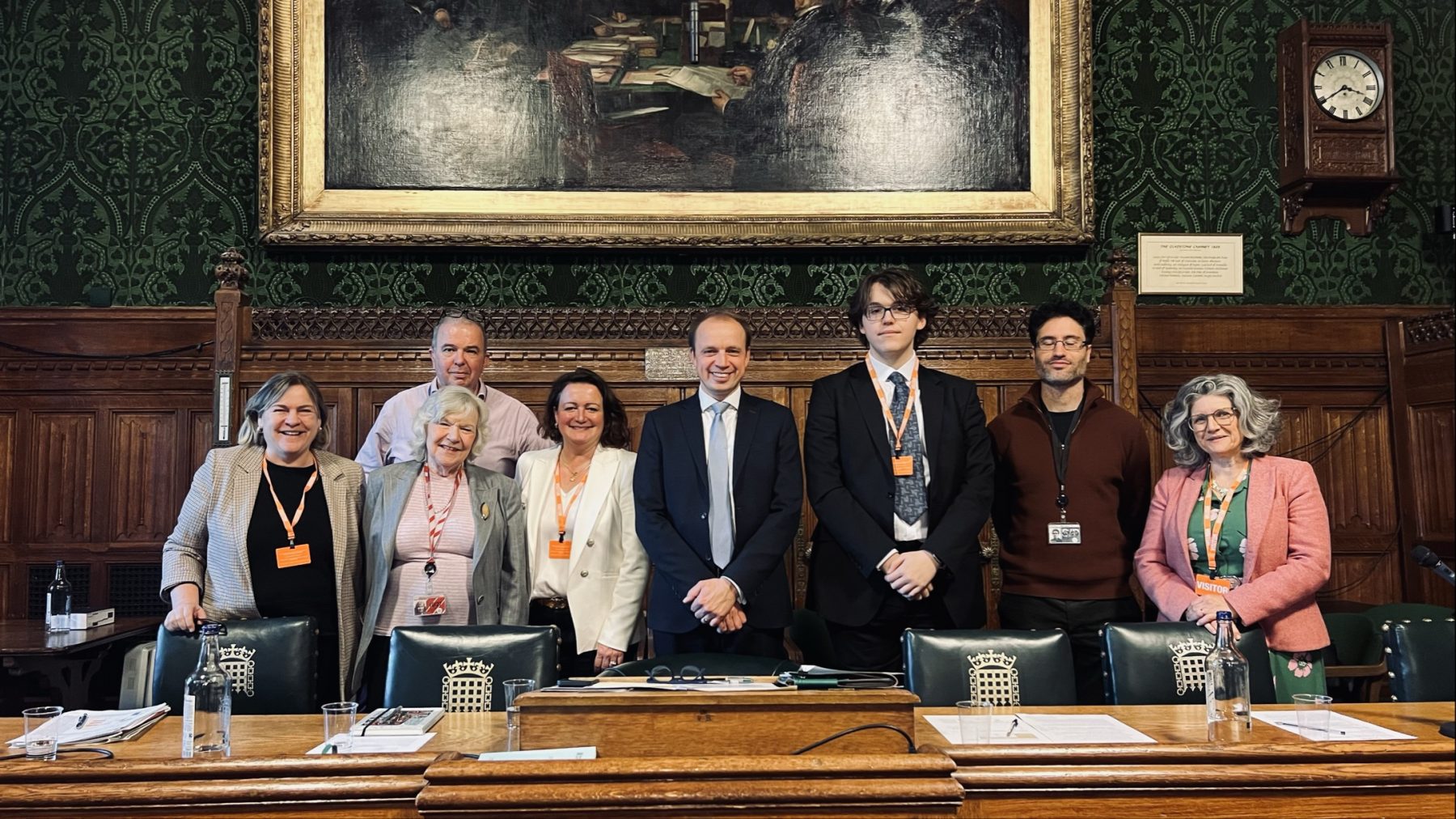
This month, we held a follow-up event with Baroness Smith, the Skills Minister, to take stock of progress. The Minister framed the moment as one of urgency, citing an ageing population, rapidly shifting labour market demands, and the as-yet-unknown impact of AI as drivers of the need for a more adaptable workforce. She was clear that the White Paper marks the beginning of the process rather than its conclusion. So, what has changed since its release, and what questions remain?
A new qualifications landscape takes shape
The most significant structural reform in the White Paper was the simplification of Level 3 qualifications into three clear pathways: A Levels, T Levels, and the newly introduced V Levels. Following a public consultation that closed in January 2026, the Government published its response in March, confirming that the first V Levels will be taught from September 2027 in Digital, Education and Early Years, and Finance and Accounting, with further subjects rolling out through to 2030. Each V Level is equivalent in size to one A Level, allowing students to mix and match vocational and academic subjects. Two new Level 2 pathways, a one-year Further Study route and a two-year Occupational route, were also confirmed. Crucially, no additional qualifications will be defunded in 2026/27, addressing the “qualifications black hole” concern raised at our first reactions event. However, consultation respondents warned that rushed implementation could damage quality and employer confidence.
Participants at our event also noted that school performance metrics have for years incentivised academic pathways, meaning fewer young people arrive at post-16 already oriented towards vocational routes. A full implementation plan is expected in June 2026.
The Growth and Skills Levy launches
From 1 April 2026, the Apprenticeship Levy will be replaced by the Growth and Skills Levy. For the first time, employers can use levy funds on short, modular courses rather than only full apprenticeships. Seven initial Apprenticeship Units launched with the new levy, covering areas including AI leadership, solar PV installation, and welding. SMEs will have apprenticeship training for under-25s fully funded. At the same time, the levy expiry window has been reduced from 24 to 12 months, and the 10% government top-up has been removed, tightening the funding environment for some employers even as flexibility increases elsewhere.
Participants at our event welcomed the greater flexibility but noted that engaging SMEs on training and placements remains administratively burdensome, with some suggesting that working through trade and representative bodies could offer a more practical route to reaching smaller employers at scale.
Apprenticeship standards defunded
Alongside the levy reforms, the Government confirmed on 19 March 2026 that 16 apprenticeship standards will lose funding from September 2026, including Team Leader (Level 3), Operations Manager (Level 5), Coaching Professional (Level 5), and Chartered Manager (Level 6). The rationale is to redirect investment towards younger learners. From January 2026, Level 7 apprenticeship funding was also restricted to those aged 16-21 for the same reasons. Both changes have proved controversial.
While this announcement came after our event with the Skills Minister, questions about management and leadership development were already present in the room, with participants noting that a significant proportion of people move into management roles without formal training or support. The defunding of these standards sharpens those questions, and it remains unclear how the gap will be filled.
Skills England: early steps
Skills England, formally established in June 2025 following the closure of the Institute for Apprenticeships and Technical Education (IfATE), published its 2025-26 Delivery Plan in January 2026 and launched the second round of Local Skills Improvement Plans, with plans due for approval by Summer 2026. A new Level 4 AI and Automation Practitioner apprenticeship launched in March 2026. Participants at our event welcomed the vision for Skills England as a convening, data-driven body capable of simplifying the skills landscape, but questioned whether it risks carrying an excessive burden of expectation without sufficient structural and financial support to match its ambitions.
Careers guidance: a merger in progress
One of the notable gaps identified in the White Paper was careers guidance. Progress here remains uncertain. The Government is proceeding with its merger of the National Careers Service and Jobcentre Plus into a new Jobs and Careers Service, with around 1,000 careers advisers to be brought in-house by October 2026. Parliamentary committees have raised questions about the pace and detail of the transition, and a detailed plan was promised by April 2026. At our event, participants emphasised that careers guidance needs to evolve into a form of lifelong learning support rather than a single intervention at 16 or 18, with the current system described as fragmented, inconsistently funded in schools, and at risk of becoming a tick-box exercise.
Looking ahead
The months since the White Paper’s publication have seen real momentum: the V Levels consultation response, the launch of the Growth and Skills Levy, and Skills England’s first delivery plan all represent meaningful steps forward. At the same time, the questions raised at our first reactions event have not gone away. Further Education (FE) capacity, employer engagement, the coherence of careers guidance, and the adequacy of funding for adult learners remain live concerns. As the Minister herself acknowledged, the White Paper is the start of a process, and the June 2026 implementation plan will be an important next test of whether its ambitions are matched by the detail needed to deliver them.
To hear more about the work of the All-Party Parliamentary Group for Skills, Careers and Employment, click here.