
 Accessibility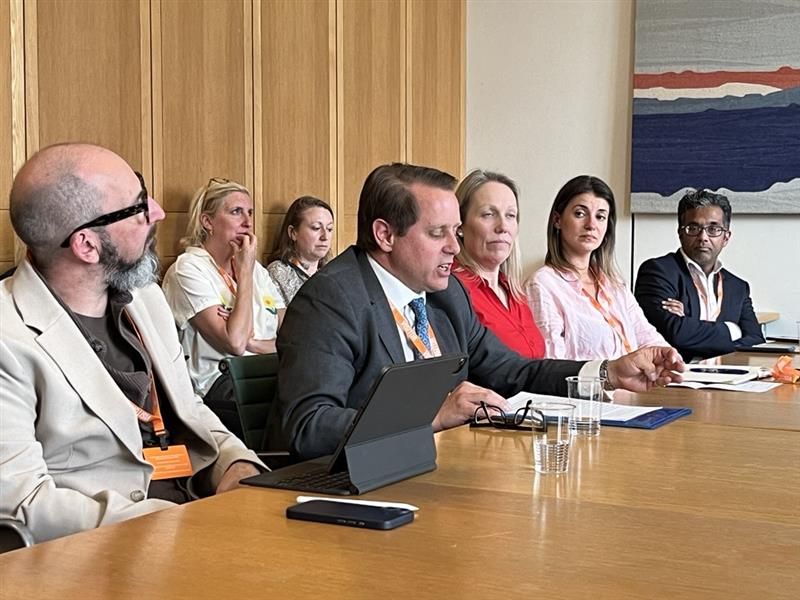
Discussion Summary
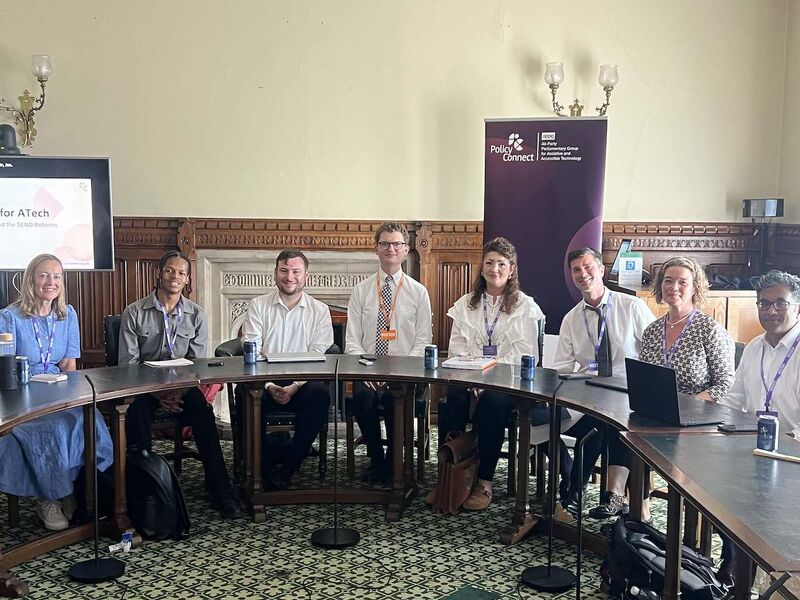
On 28 April 2026, the All-Party Parliamentary Group for Assistive and Accessible Technology (APPGAT) convened a parliamentary roundtable in Portcullis House to explore the UK’s position as a global leader in assistive technology exports and the role of policy, innovation and international collaboration in supporting future growth. The session, chaired by Sadik Al-Hassan MP, brought together representatives from industry, trade bodies, universities, financial institutions, accessibility organisations and government stakeholders.
The discussion highlighted that the UK continues to hold a strong international reputation in assistive technology, inclusive education and accessibility innovation. Contributors emphasised that the UK’s success is driven not only by innovative products, but by the wider systems, expertise and policy frameworks that underpin inclusion, including Disabled Students’ Allowance (DSA), Access to Work and broader approaches to SEND and accessibility. Several speakers noted that governments internationally increasingly look to the UK model when developing their own approaches to inclusion and assistive technology adoption.
Participants highlighted significant opportunities for growth driven by ageing populations, digital transformation, artificial intelligence (AI), and increasing international focus on disability inclusion. However, contributors also raised concerns around barriers to scaling innovation, fragmented export support, investment challenges and the risk that domestic policy changes could weaken the UK’s international credibility.
There was a focussed discussion around the Disabled Students’ Allowance (DSA) consultation and concerns that reducing emphasis on specialist assistive technology in favour of mainstream accessibility tools could undermine both outcomes for disabled people and the UK’s position as an international leader in assistive technology. Contributors stressed that while mainstream accessibility tools have an important role, specialist assistive technology and personalised support pathways remain essential.
The discussion also highlighted the need for stronger collaboration across the sector, including integrated product ecosystems, improved routes to market, clearer economic evidence and greater cross-government coordination between education, disability, industrial strategy, innovation and trade policy. Overall, the roundtable concluded that assistive technology should increasingly be viewed not solely as a disability issue, but as a strategic economic, educational and industrial opportunity for the UK.
Thank you to the speakers including Patrick McGrath, Jack Churchill OBE and Caroline Wright, and all others who contributed to the discussion. We look forward to continuing this work through the APPGAT.
If interested in contributing to further Accessibility Policy, or ATech Policy Lab work, please contact Robert McLaren (robert.mclaren@policyconnect.org.uk)
For a more detailed outcome summary of the discussion, please follow the link under ‘related documents’ on this page.

Cross-party forum

 Related content
 Event
Event  Related documents