

 Health
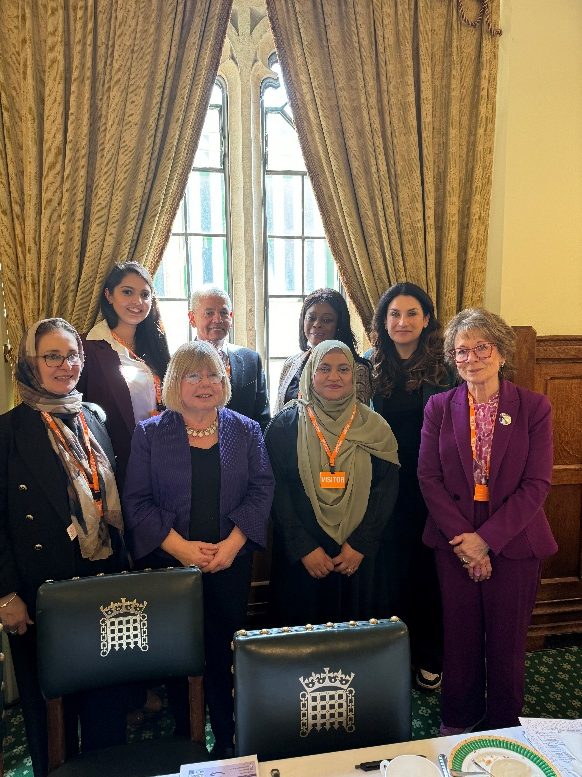
In April 2026, Policy Connect convened a parliamentary roundtable to examine ethnic inequalities in postpartum severe mental illness care and the findings of the NIHR-funded POSIE project. Chaired by Liz Twist MP, the session brought together researchers, clinicians, patient and public involvement leads, and parliamentarians to explore where inequalities in care experiences and outcomes are most pronounced and how they can be addressed.
Speakers examined what culturally safe care should look like in practice, how co-designed care pathways can be embedded consistently across maternity and perinatal mental health services, and what barriers exist to implementation and scale.
They called for policy makers to treat perinatal mental health as a life-course issue and explicitly design services to include the most marginalised women, including those who have had children removed, those experiencing domestic abuse, and those facing immigration-related barriers. Participants emphasised the need to remove the barriers that prevent women from coming forward by actively addressing fear of baby separation, stigma, and the coercive misuse of mental health frameworks, particularly how they affect Black and brown women. They also highlighted that distress presents itself differently across cultures, and that training, assessment tools and care pathways ought to be designed to reflect cultural diversity.
The roundtable also considered how POSIE’s findings can be translated into measurable improvements in care, and what outcomes policymakers and the NHS should be tracking over the next three to five years to judge progress in reducing ethnic inequalities in postpartum mental health care. Suggestions included a move from reporting and crisis response to investment in prevention and early intervention, with sustained funding to support the implementation of this shift. Participants also urged policy makers to fund the voluntary sector as core infrastructure, with sustained, protected funding for community and charitable organisations, including birth advocacy services that reach the women that statutory services miss. They called for binding targets to be set and for clear accountability for reducing the disproportionate risk of maternal death and severe mental illness hospitalisation faced by women from ethnic minorities.
The session closed with the Parliamentary Office of Science and Technology (POST), represented by Annie O’Brien and Dr Clare Lally, who introduced POST’s forthcoming research briefing on perinatal mental health, commissioned by the House of Commons Library and built from a call for evidence, a literature review, stakeholder interviews and two rounds of peer review. POST’s full report is available here: Mental health during and after pregnancy – POST


 Related content